

 SIGN IN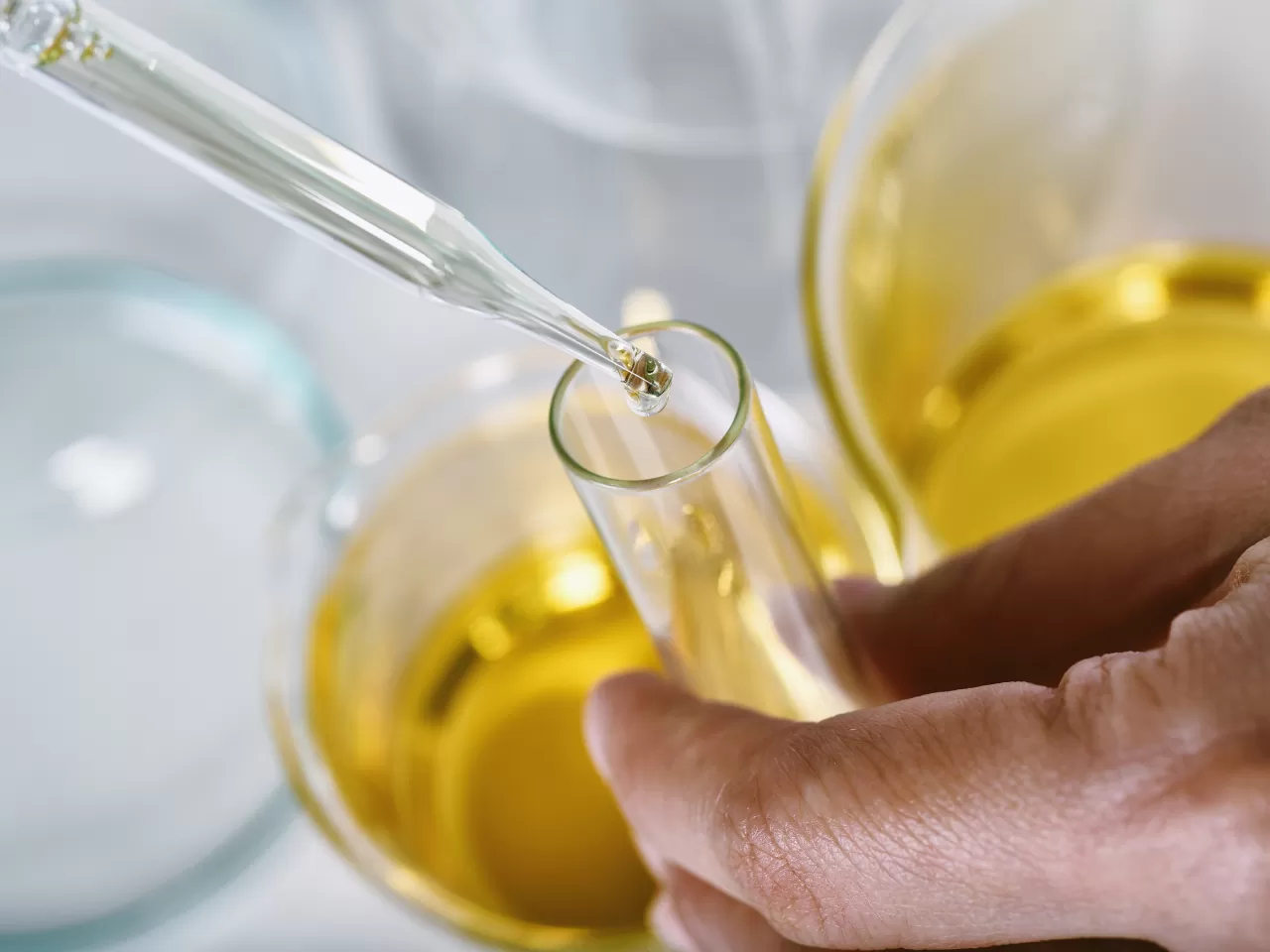
Insider Look at the Science & Engineering Behind Renewable Lubricants
For more than 30 years, the driving force behind the innovation at Renewable Lubricants has been a relentless passion for creating sustainable industrial lubricants without sacrificing performance. As the largest and oldest manufacturer of environmentally acceptable lubricants in North America, the company has proven that this goal is not only possible but essential to the future of responsible manufacturing.
Behind every Renewable Lubricants product is a team of lubrication engineers and chemists pushing the limits of what renewable oils can do. A look behind the scenes reveals how science and engineering come together to create lubricants that perform and protect the environment.
Inside the World of Lubricant Engineering
The Renewable Lubricant story begins in the early 1980s, when company founder Bill Garmier, a lubrication engineer by trade, began experimenting with vegetable oils in his garage. His research earned support from a U.S. government program aimed at reducing dependence on foreign oil.
What started as a small research project turned into a lifelong pursuit of better performance through renewable chemistry. Over the decades, Bill’s formulations evolved from simple vegetable-based blends to complex bio-based synthetics and PAOs. His work led to more than 180 U.S. and international patents, each representing a breakthrough in biodegradable lubricant technology and the foundation for Renewable Lubricants’ reputation as a leader in sustainable performance.
Today, the Renewable Lubricants’ engineering team combines decades of technical experience with a passion for hands-on problem solving. Led by Bill and joined by Luke Bruce, a chemical engineer with an industrial background, the group includes Jeff Schloneger, VP of Operations, and Ben Garmier, VP of the company and the bridge between R&D and market readiness.
Together, they manage the whole product development process, from formulation to field testing.
How a Product Comes to Life
Most projects begin when a customer approaches the lubricant engineers with a specific performance challenge, whether that’s improving lubrication for high-heat equipment, meeting environmental regulations, or extending the life of hydraulic systems.
From there, the R&D process moves through several deliberate stages:
- Evaluate needs and performance goals: The team reviews the original equipment requirements and identifies key performance targets such as viscosity, temperature range, pressure tolerance, and environmental compliance.
- Select base oils and additives: Engineers determine the best combination of renewable and synthetic base oils, along with environmentally responsible additives, to meet those targets.
- Formulate and test in-house: Each new formulation is developed and analyzed in Renewable Lubricants’ Ohio lab, where engineers will do in house testing before sending the product off for third party verification.
- Conduct field testing: Once the formulation meets internal benchmarks, products will often be tested in real-world conditions to validate performance.
- Refine and finalize: Based on field results, the team fine-tunes the formulation to achieve the ideal balance of performance, cost, and sustainability.
- Move into production and quality verification: After approval, the product enters full production, undergoing Renewable Lubricants’ strict in-house quality control and third-party validation process.
The entire cycle can take anywhere from a few months to several years, depending on the complexity of the lubricant and its application.
Key Engineering Considerations
Creating a lubricant that performs under pressure while protecting the environment requires both precision and perspective, with special focus on the following factors:
1. Environment and application
Each lubricant is engineered for the specific conditions it will face. For example, marine applications require products that resist saltwater exposure, and food-grade lubricants must operate safely near consumable products, withstand high temperatures, and endure frequent washdowns. By tailoring base oils and additive packages to each environment, Renewable Lubricants ensures consistent, reliable performance across diverse industries.
2. Balancing performance, biodegradability, and cost
Each lubricant must meet OEM specifications and deliver long-term protection while still being environmentally acceptable and affordable. Renewable Lubricants’ approach blends renewable and synthetic base oils to achieve the right mix of oxidation resistance, wear protection, and environmental compatibility without overengineering or overpricing.
3. Compliance and quality assurance
Every Renewable Lubricants product is tested to meet rigorous standards. The company follows strict in-house quality control procedures, verifying viscosity, specific gravity, and additive concentration before each batch ships. Third-party labs confirm results, and the company maintains samples from every order for traceability. Renewable Lubricants has finalized ISO compliance to strengthen documentation and testing protocols across its operations.
Together, these engineering considerations define what makes Renewable Lubricants different: products designed not only to meet performance demands but to respect the environment and industries they serve.
Other recent milestones include:
- Achieving UL® certification for a new transformer oil line, with Factory Mutual certification next on the horizon.
- Developing an environmentally friendly anti-seize lubricant, designed to eliminate the toxic metals and “forever chemicals” common in conventional products.
- Exploring AI-assisted formulation tools to accelerate research and improve customer recommendations.
- Working on new base oil blends to provide better lubricity and lower wear than conventional petroleum lubricants at more attainable cost points than comparable biodegradable products.
- New ashless anti-wear and extreme-pressure chemistries can now match or exceed the performance of traditional zinc-based additives, forming strong protective films while improving biodegradability and reducing environmental impact.
The Next Generation of Lubricant Science
As Renewable Lubricants continues to expand its R&D capabilities, the goal remains the same as it was in the garage more than 35 years ago: to engineer lubricants that protect both equipment and the environment. Through ongoing research in biodegradable lubricant technology, the company is developing new formulations that perform as well as (or better than) traditional petroleum-based products.
The future of high-performance lubrication isn’t just petroleum. It’s renewable engineering, refined by decades of science and driven by people who believe performance and responsibility belong together.
How can we help you achieve peak performance with biodegradable lubricants? Contact us today to discuss your project.